

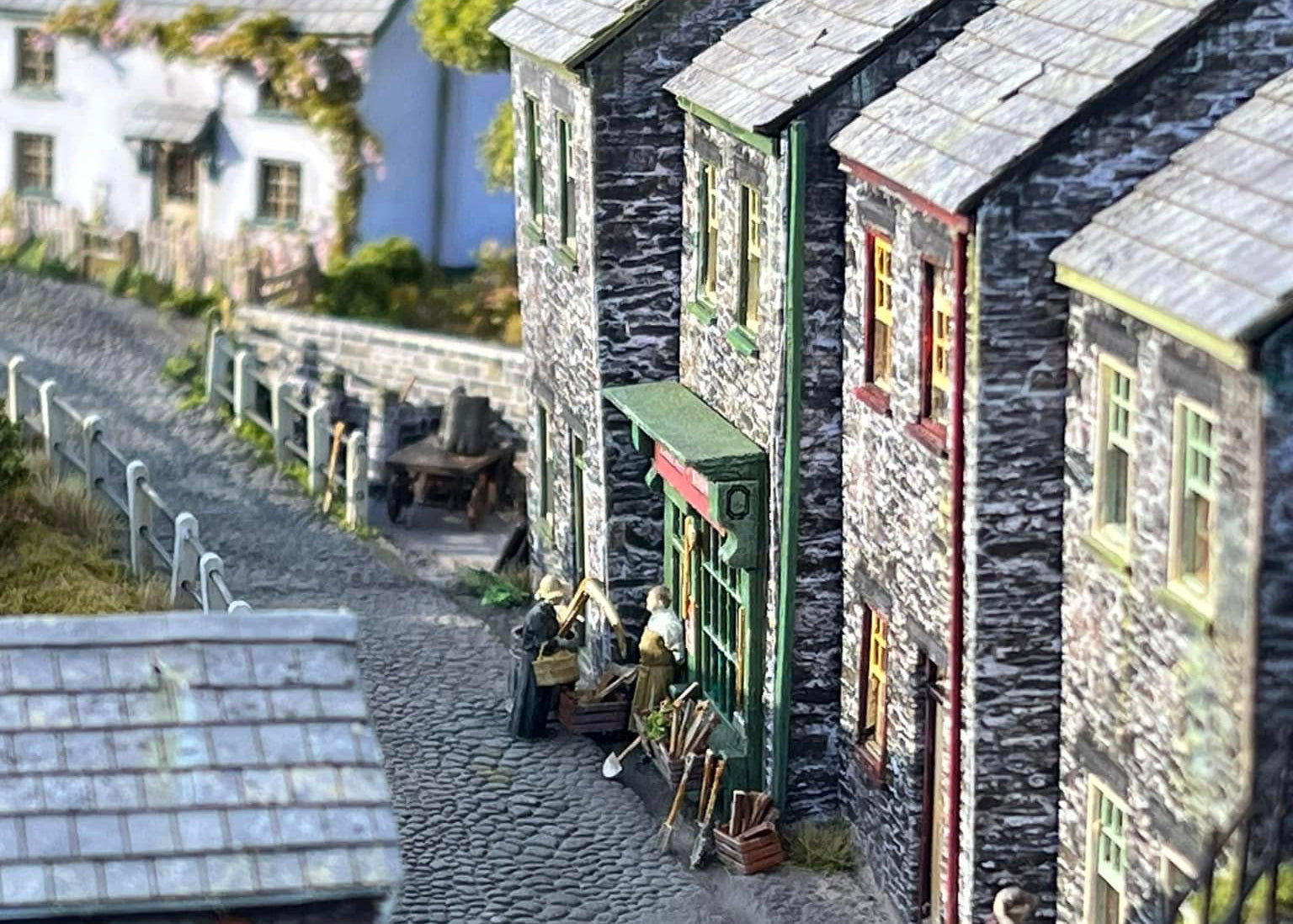
STREET SCENES
A convincing street scene is about more than buildings and vehicles. It is the people going about their daily lives who give a town, village or city its character: shoppers browsing outside a store, tradespeople at work, neighbours stopping for a conversation or children playing.
This guide brings together figures, animals and street details suitable for scenes across a wide range of periods. Whether you are modelling a quiet residential terrace, a busy high street, a village centre or a more neglected corner of the modern town, carefully chosen figures can suggest a particular time, place and story without overcrowding the scene.
Image courtesy of Andrew Moore
SHOPS AND SHOPPING
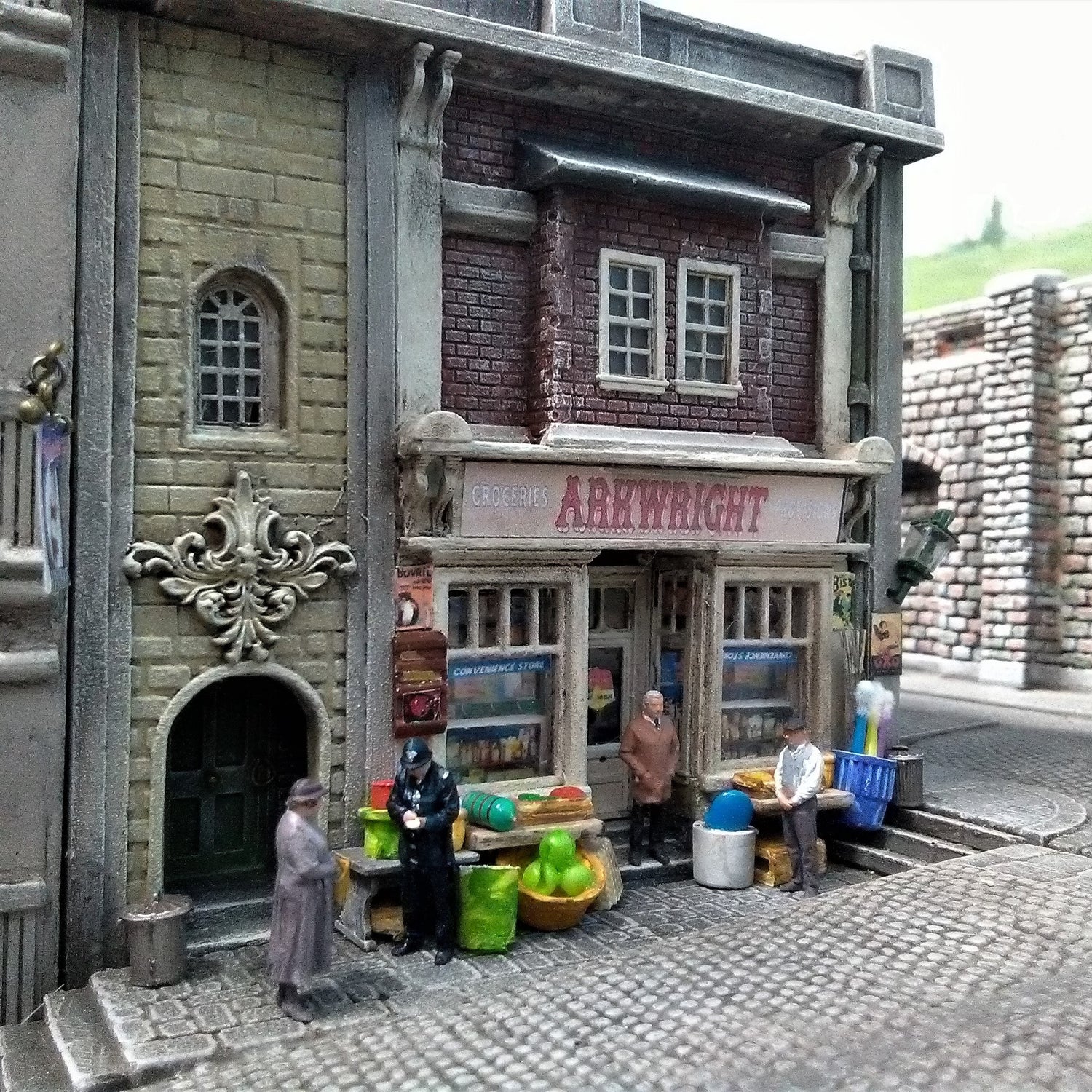
Before supermarkets, retail parks and online shopping, high streets and village centres were lined with grocers, butchers, bakers, ironmongers and other independent businesses, often with goods displayed outside to attract passing customers.
Shoppers carrying baskets and bags, shopkeepers serving at the door and customers exchanging money can turn a simple shopfront into a convincing centre of activity. Position figures in small groups rather than evenly along the pavement to suggest natural pauses, queues and conversations.
Image Courtesy of Ian Costello


STREET TRADERS and HAWKERS
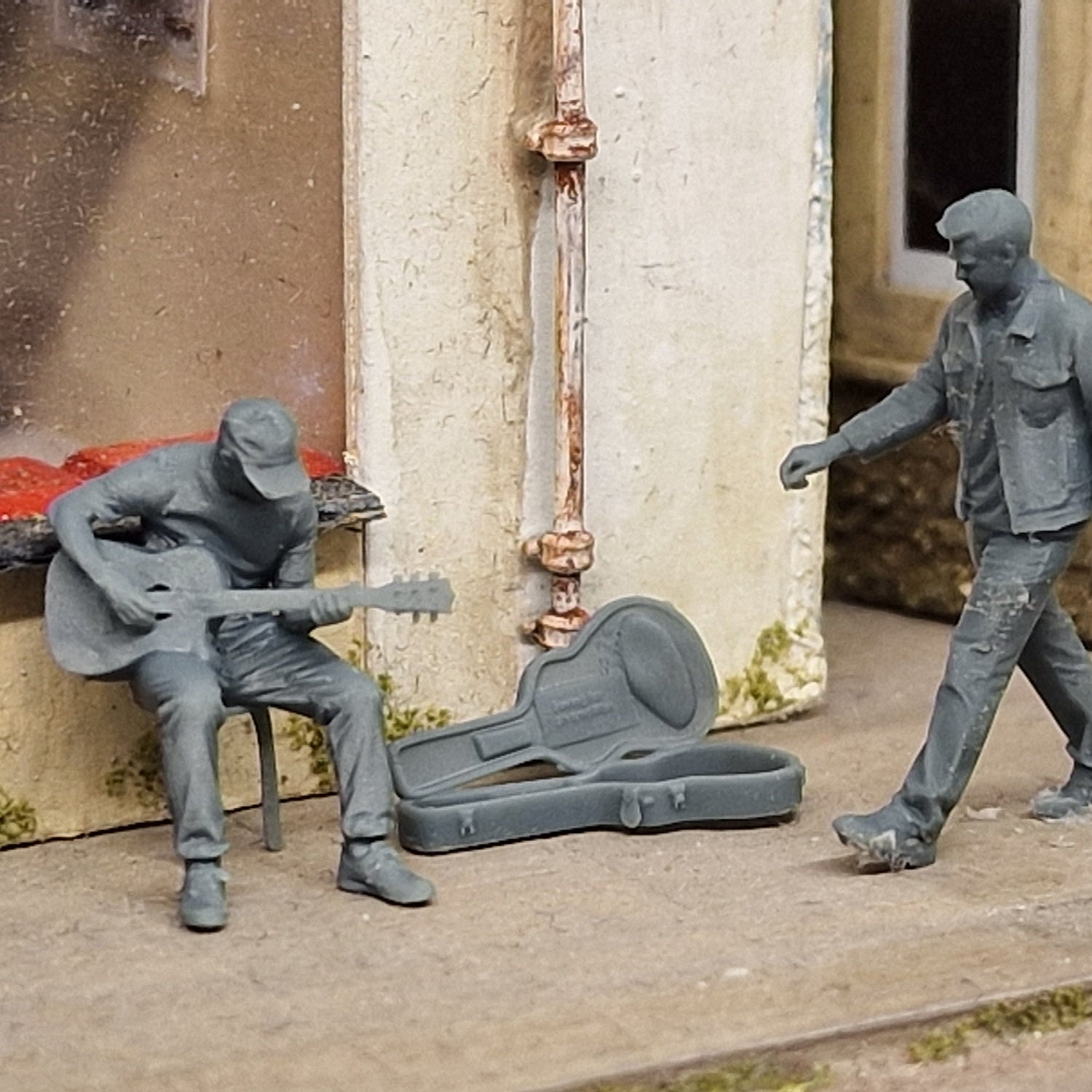
Street traders once formed a familiar part of town and city life, selling food, household goods and other wares from stalls, barrows and pitches. Their calls, displays and gatherings of customers added colour and activity to markets, street corners and busy shopping districts.
This section can also represent more recent forms of street activity, including charity collectors and buskers. These figures work particularly well around station approaches, pedestrian areas, market squares and outside prominent public buildings.


TRADESMEN AND WOMEN
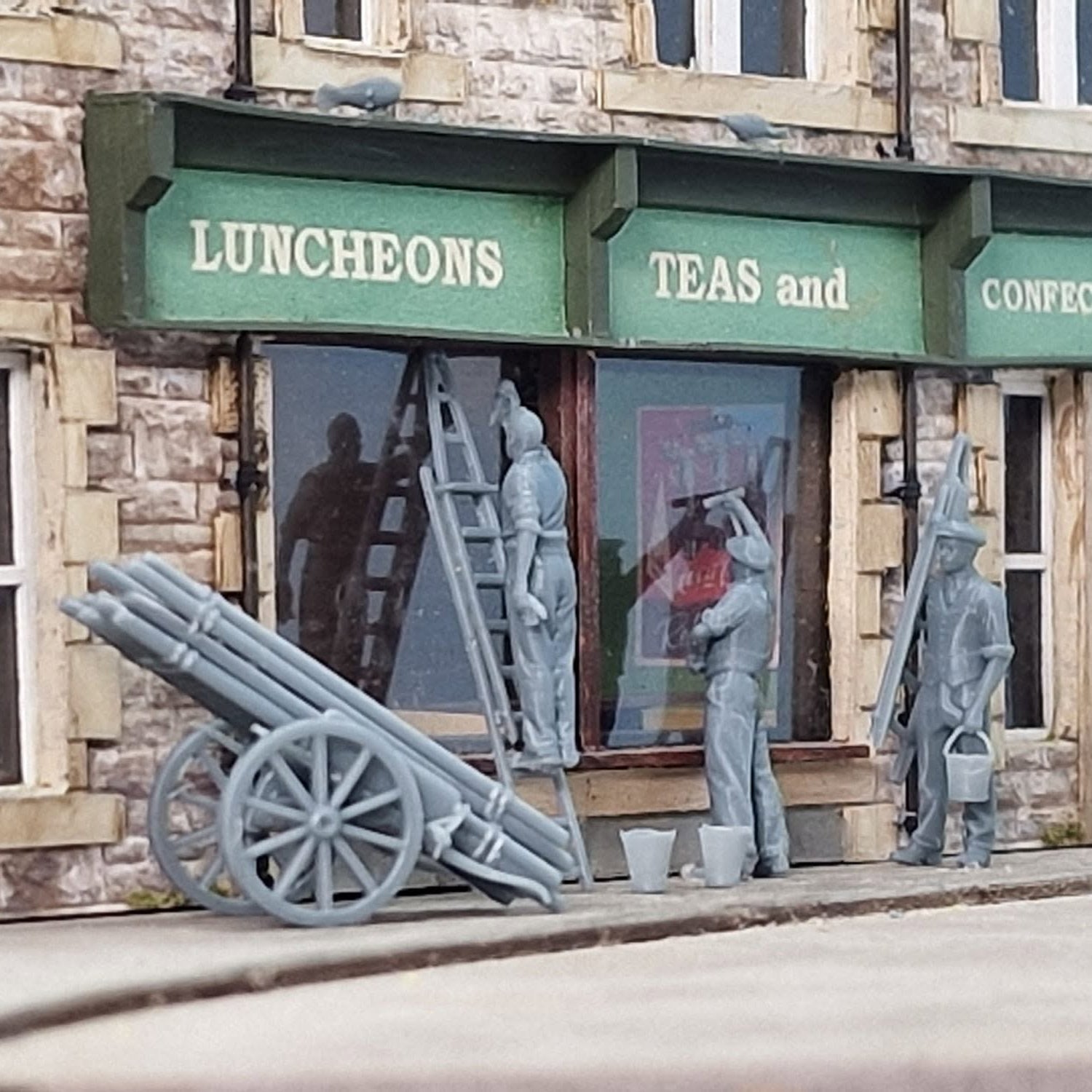
Many familiar trades were once carried out in full view of the street. Window cleaners moved between properties with ladders, buckets and hand carts. Chimney sweeps carried their collection of brushes and newspaper sellers called out the headlines from street corners.


1369 Window Cleaner and Hand Cart

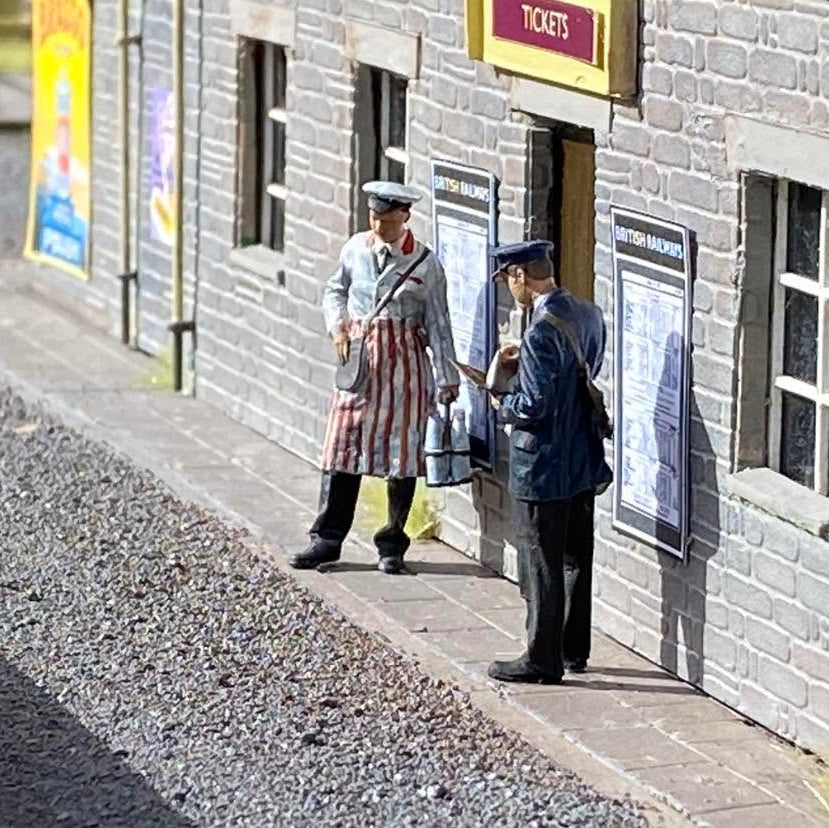
MILK DELIVERIES
For much of the twentieth century, the milkman was a familiar sight on British streets, delivering glass bottles directly to homes in the early morning. Customers commonly left empty bottles outside for collection, with fresh milk placed on the doorstep from crates carried by hand or transported on a float.
A milkman, crates and a few carefully positioned bottles can immediately establish the domestic character of a street.
Image courtesy of Stephen Mark


2674 Milk Crate with Bottles x10
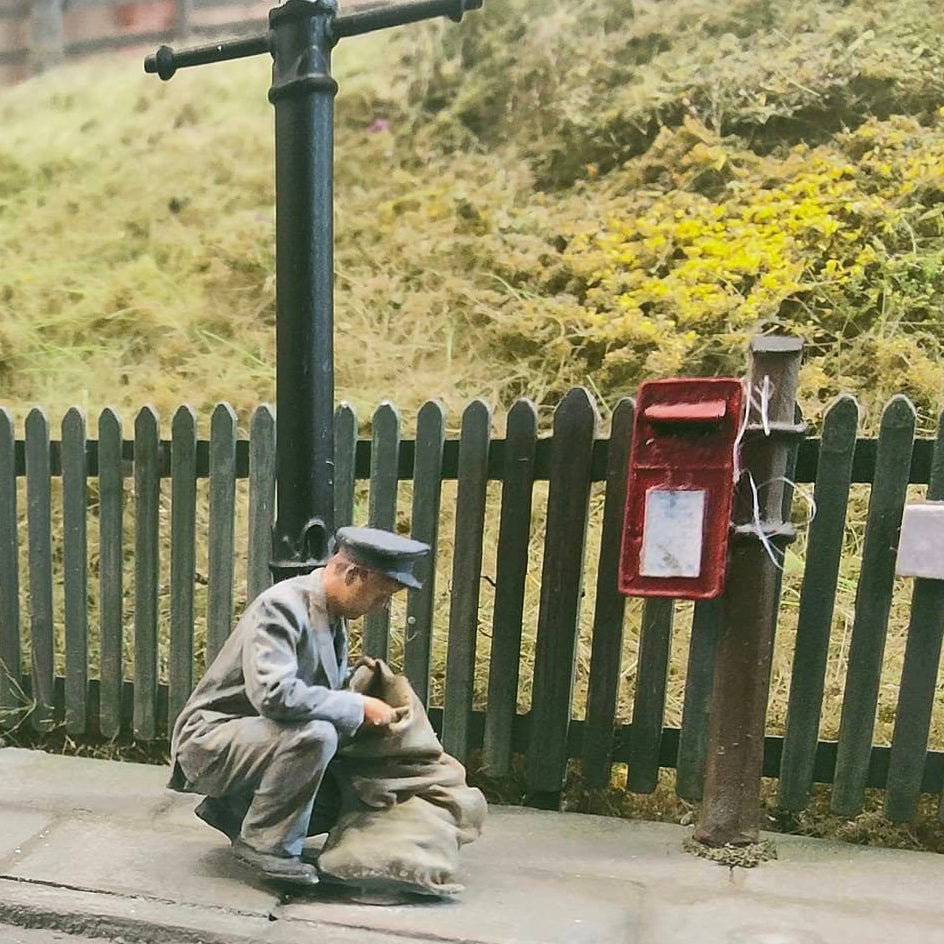
POSTAL SERVICES
Postal workers provided another regular link between individual homes and the wider community. Deliveries were made on foot or by bicycle, while postmen collected letters from pillar boxes and checked bags before continuing along their rounds.
A postman beside an open pillar box creates a particularly distinctive scene.
Image courtesy of Andy Pannett

2650 Royal Mail Pillar Box B (Open)


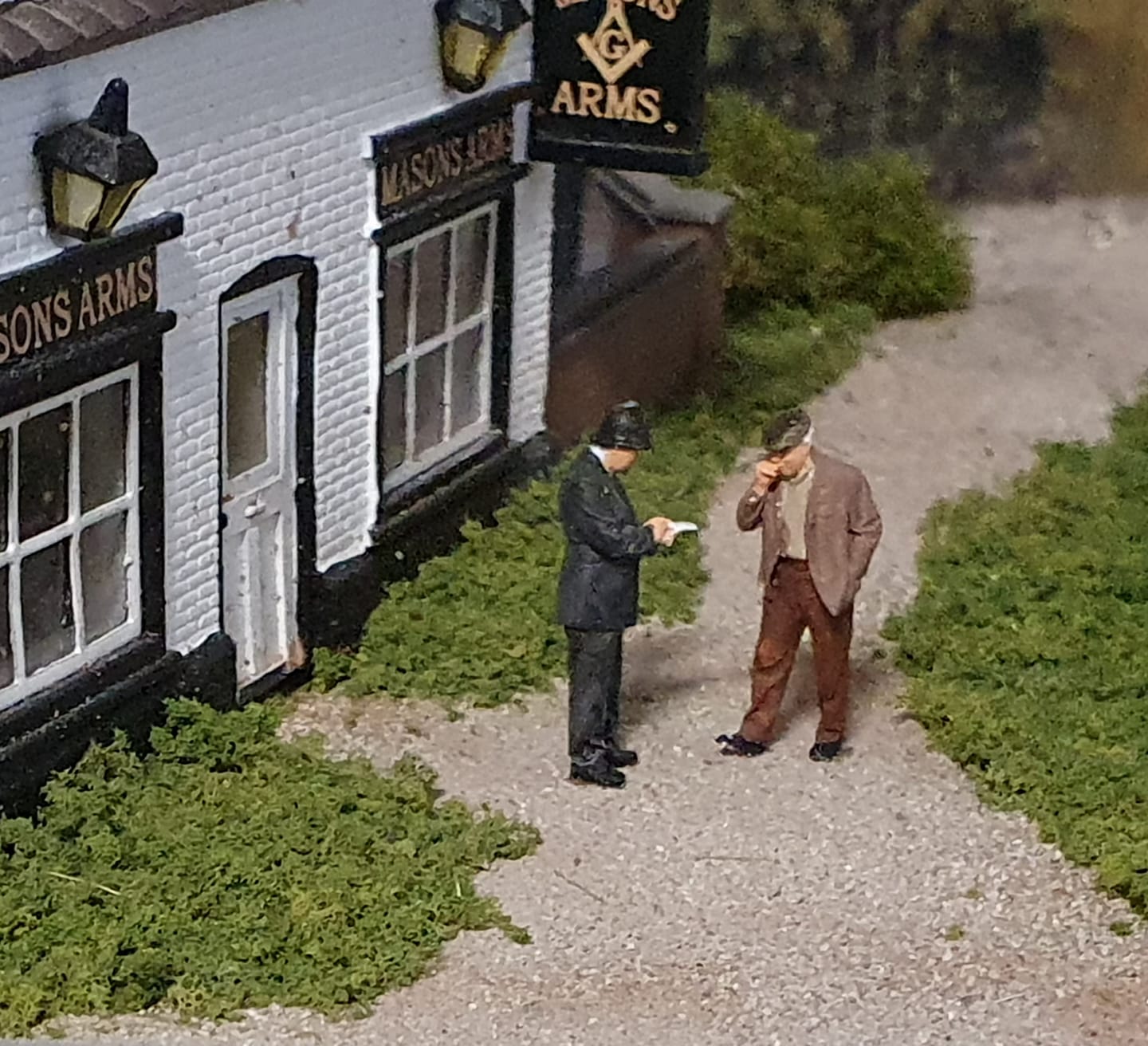
EMERGENCY SERVICES
Police officers can provide either a subtle background presence or the focus of an entire street scene. A lone beat constable suits a quieter historical setting, while modern officers in high-visibility clothing can suggest traffic control, an incident or a public event.
The surrounding scene should support the story. Small details such as gathered onlookers, a blocked pavement or an officer speaking to a resident can communicate what is happening without requiring a large or dramatic emergency.
Image courtesy of William Collett


1356 Modern Policeman in hi-vis
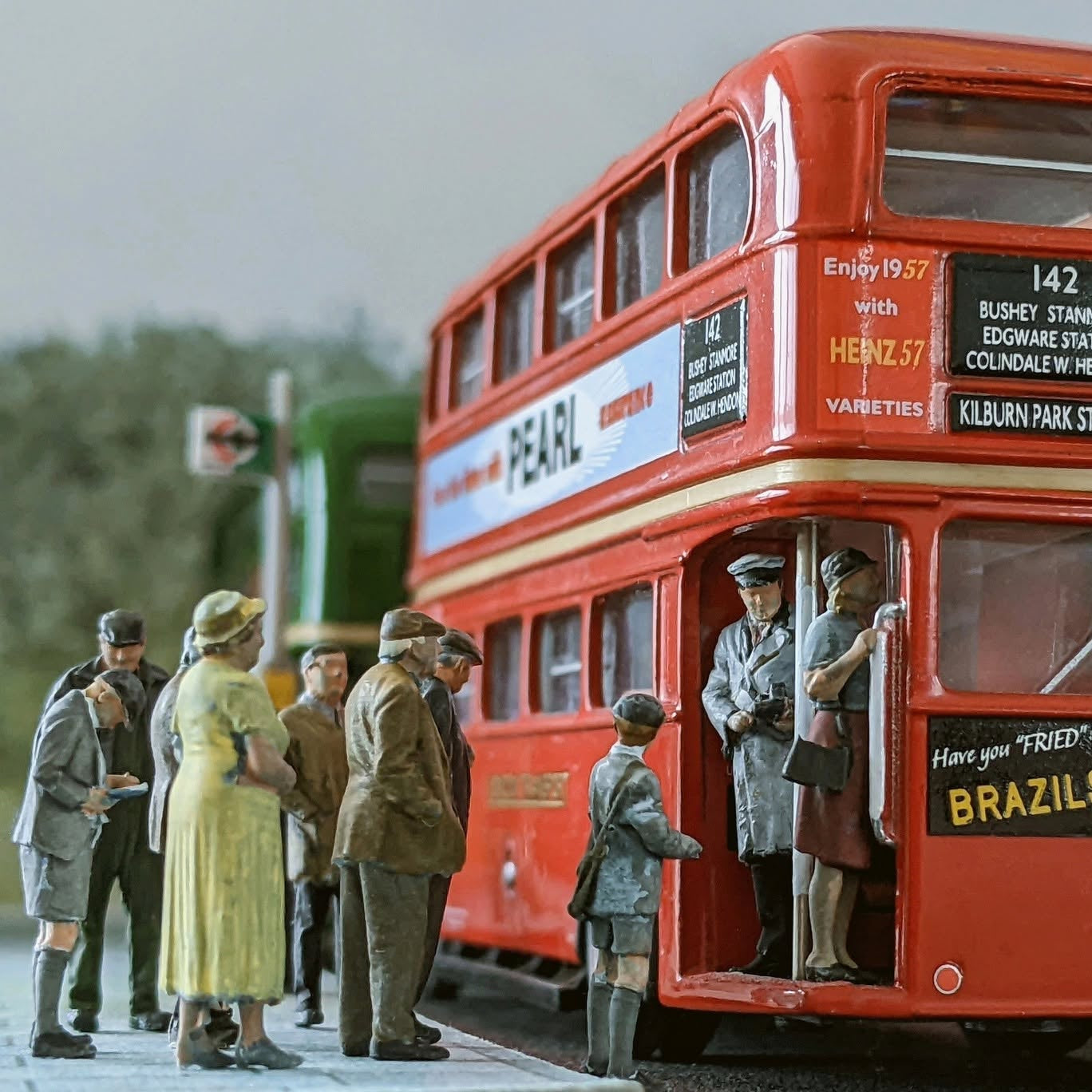
PUBLIC TRANSPORT
Buses connected residential districts, town centres, railway stations and surrounding villages, making bus stops and termini natural gathering places. Day trippers brought additional activity during holidays and special excursions.
Seated crews can be used inside vehicles, while waiting passengers help anchor a bus within the wider street scene.
Image courtesy of Richard Nardi


1300 Bus Crew - Seated Bus Driver
RUBBISH and WASTE
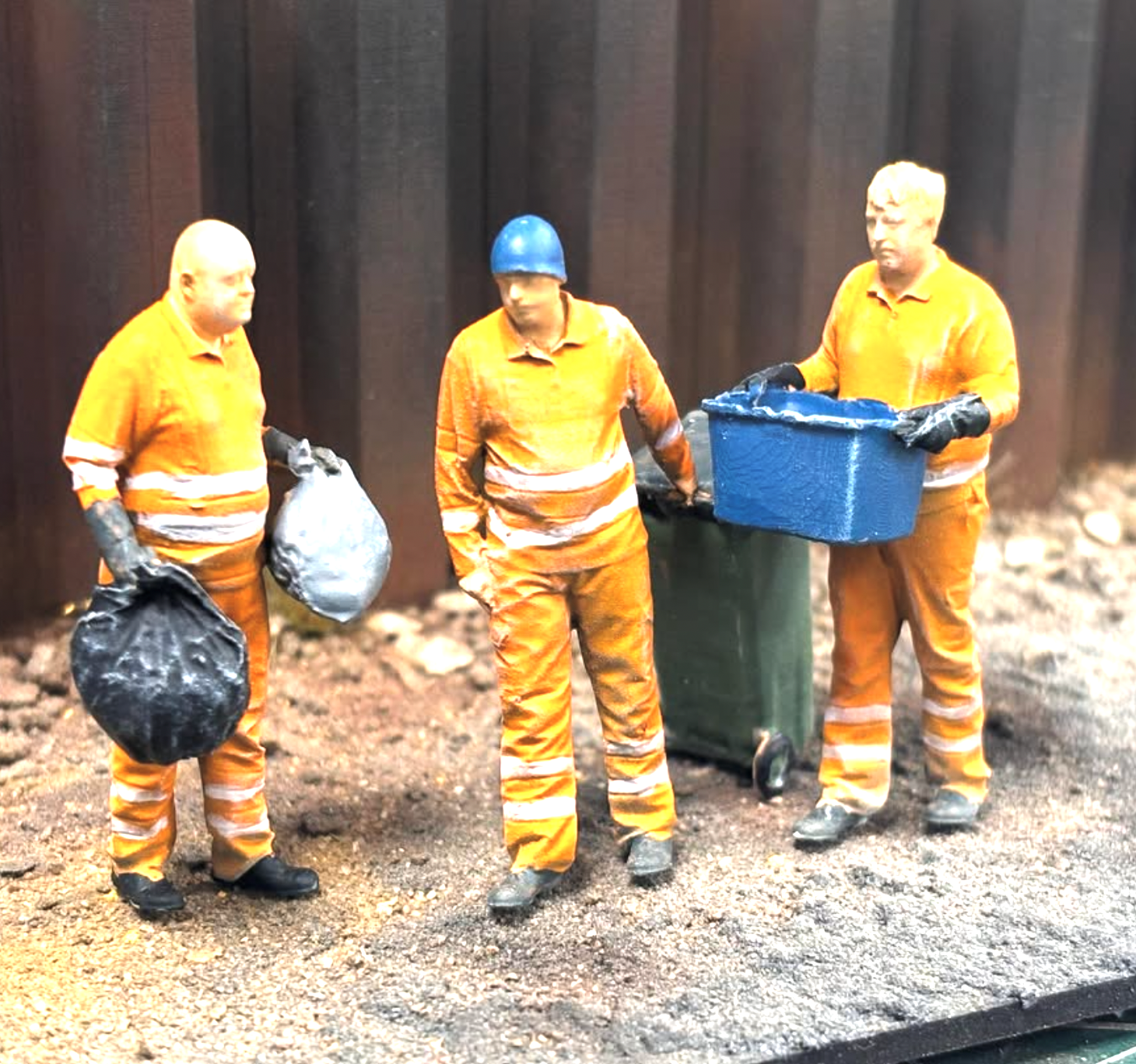
Waste collection has always been an essential, if less glamorous, part of street life. Traditional binmen carried metal dustbins from back yards and doorsteps to waiting refuse vehicles, while modern collections use larger wheeled bins and more mechanised handling.
Bins, collectors and discarded items are useful for creating less pristine and more believable streets.
Image courtesy of Bunter's Yard


DOMESTIC LIFE
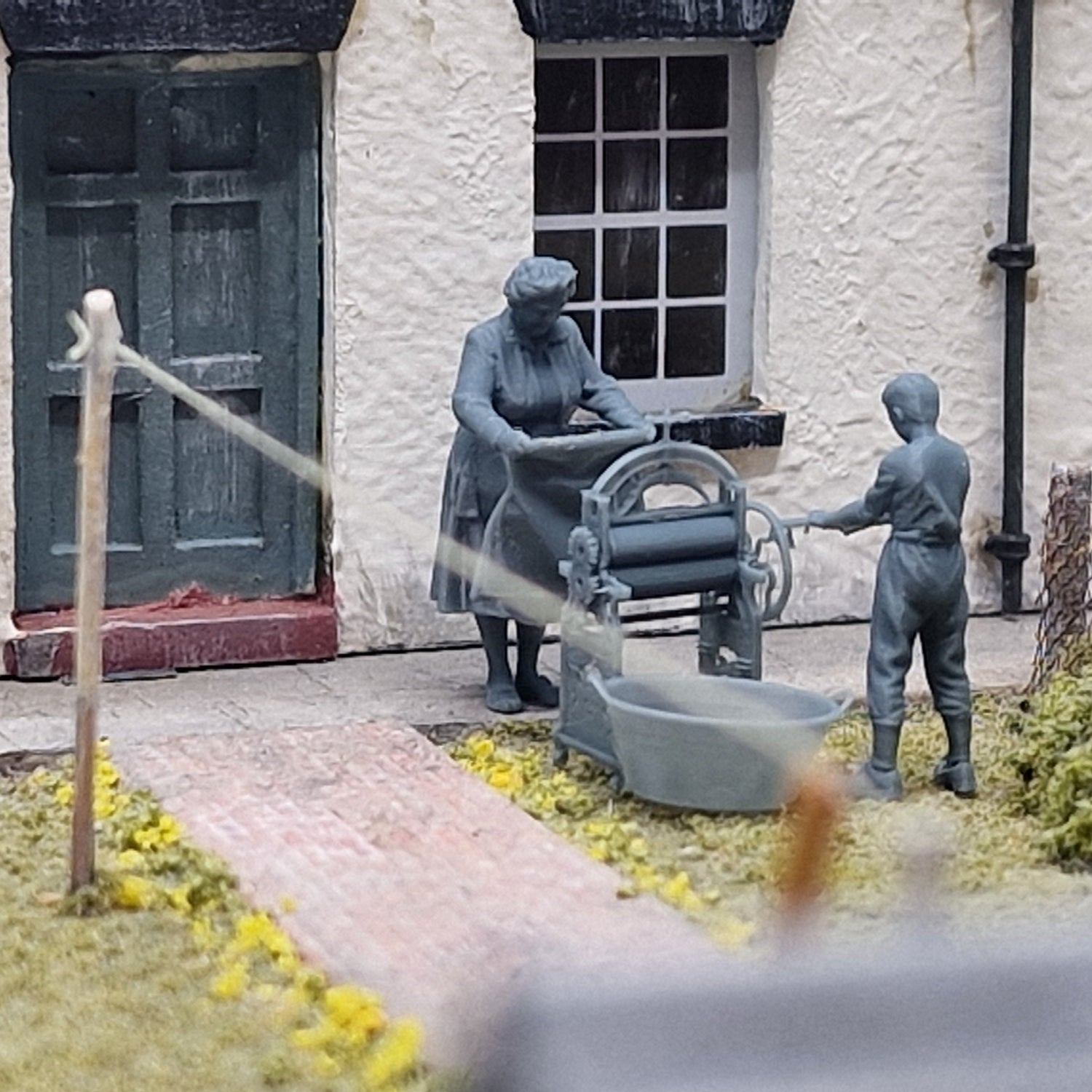
Much of everyday life once took place in full view of neighbours. Washing was hung across yards and gardens, windows were cleaned by hand, and household chores regularly spilled onto pavements, alleyways and shared spaces.
Domestic figures are particularly useful around terraced housing, cottages and back streets. Washing lines, tubs, baskets and cleaning equipment add lived-in detail, while figures performing recognisable tasks give the scene a clear purpose and sense of routine.


NEIGHBOURS and RESIDENTS
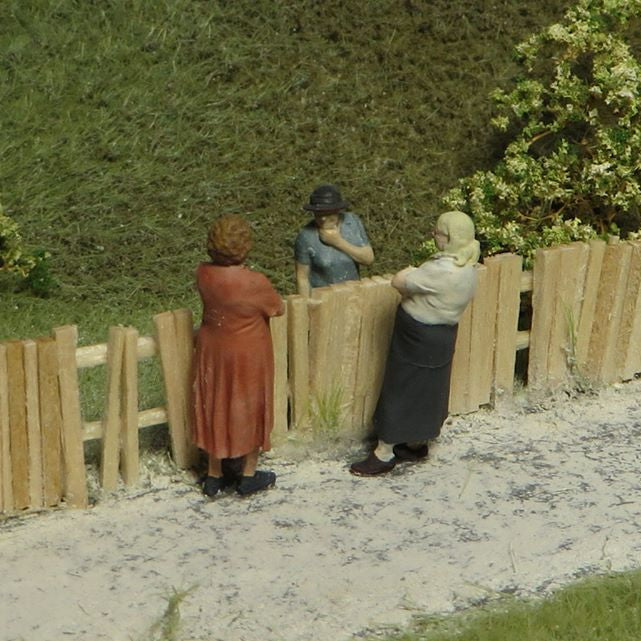
Residential streets are shaped by the people who live there. Neighbours might pause at a gate for a conversation, discuss a problem in the road or meet while walking with a pram or pushchair.
These quiet interactions are among the most effective ways to make a scene feel inhabited. Arrange conversational figures so that they appear to look towards one another, and place them near gateways, garden walls or street corners where people might naturally stop.
Image courtesy of Mick Bonwick

0199 People in Conversation Bundle


PETS and PESTS
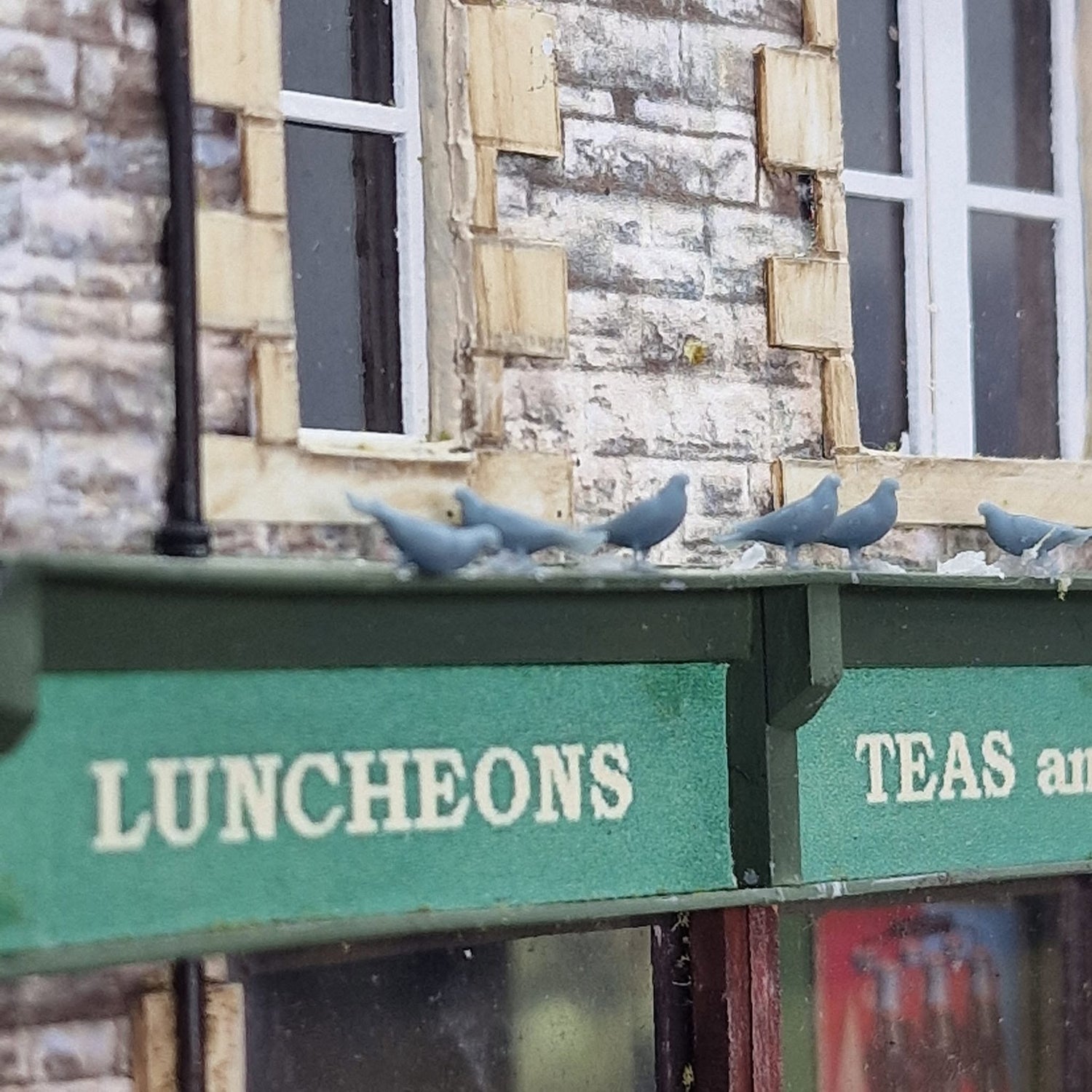
Animals an make a substantial difference to the realism of a street. Cats resting on walls or watching from a doorway suggest domestic life, while pigeons gather around pavements, rooftops and public spaces.
Rats and other pests suit yards, alleys, industrial districts and areas where rubbish has accumulated.


GARDENS and LEISURE
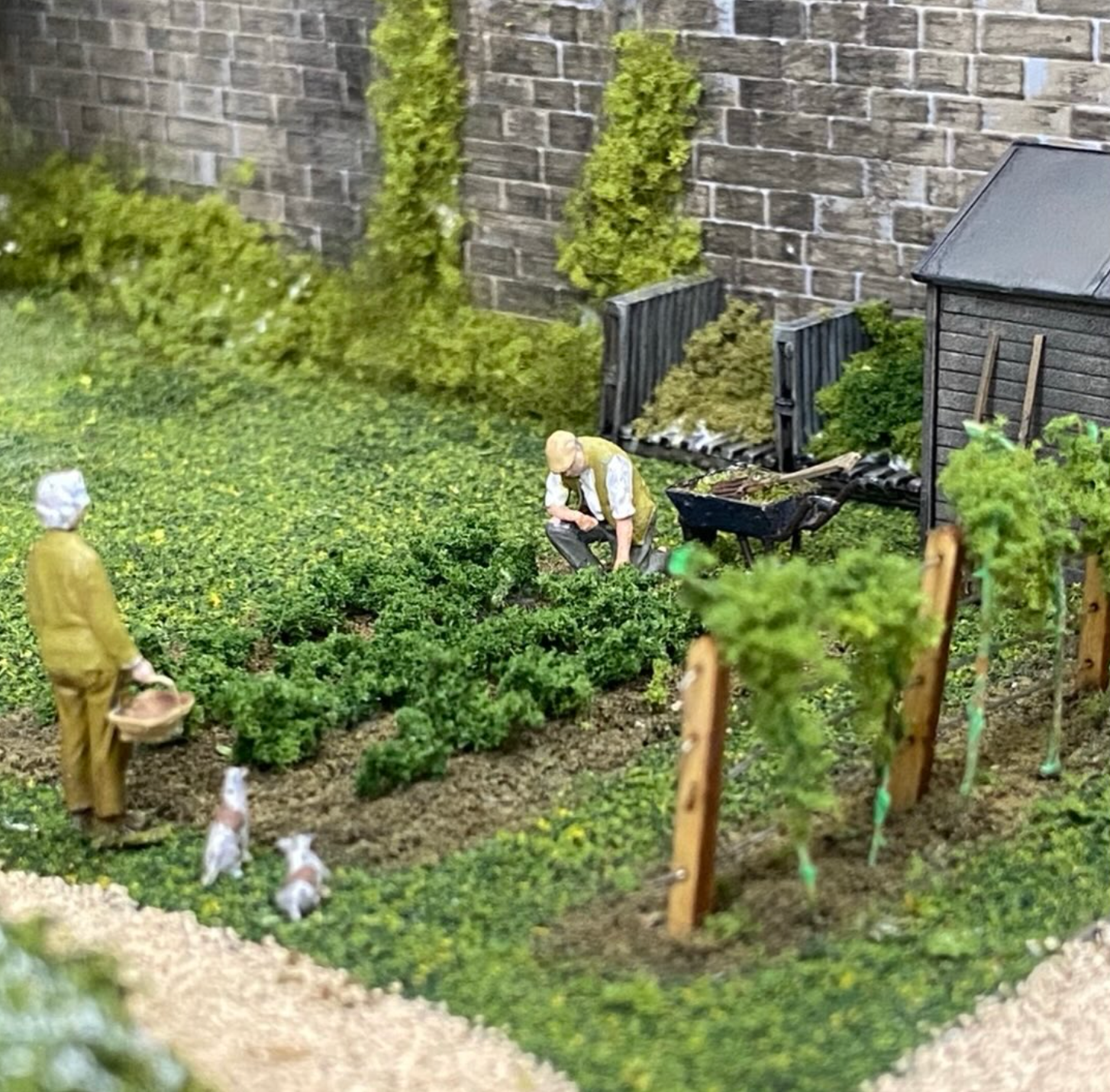
Parks, allotments, pub gardens and other green spaces provide a visual break from roads and buildings. Gardeners working with tools give these spaces purpose, while benches and seated groups create places for people to rest and socialise.
Pub gardens can be busy focal points or simple background scenes, depending on the period and location.
Image courtesy of Porth Penrhyn


CHILDREN
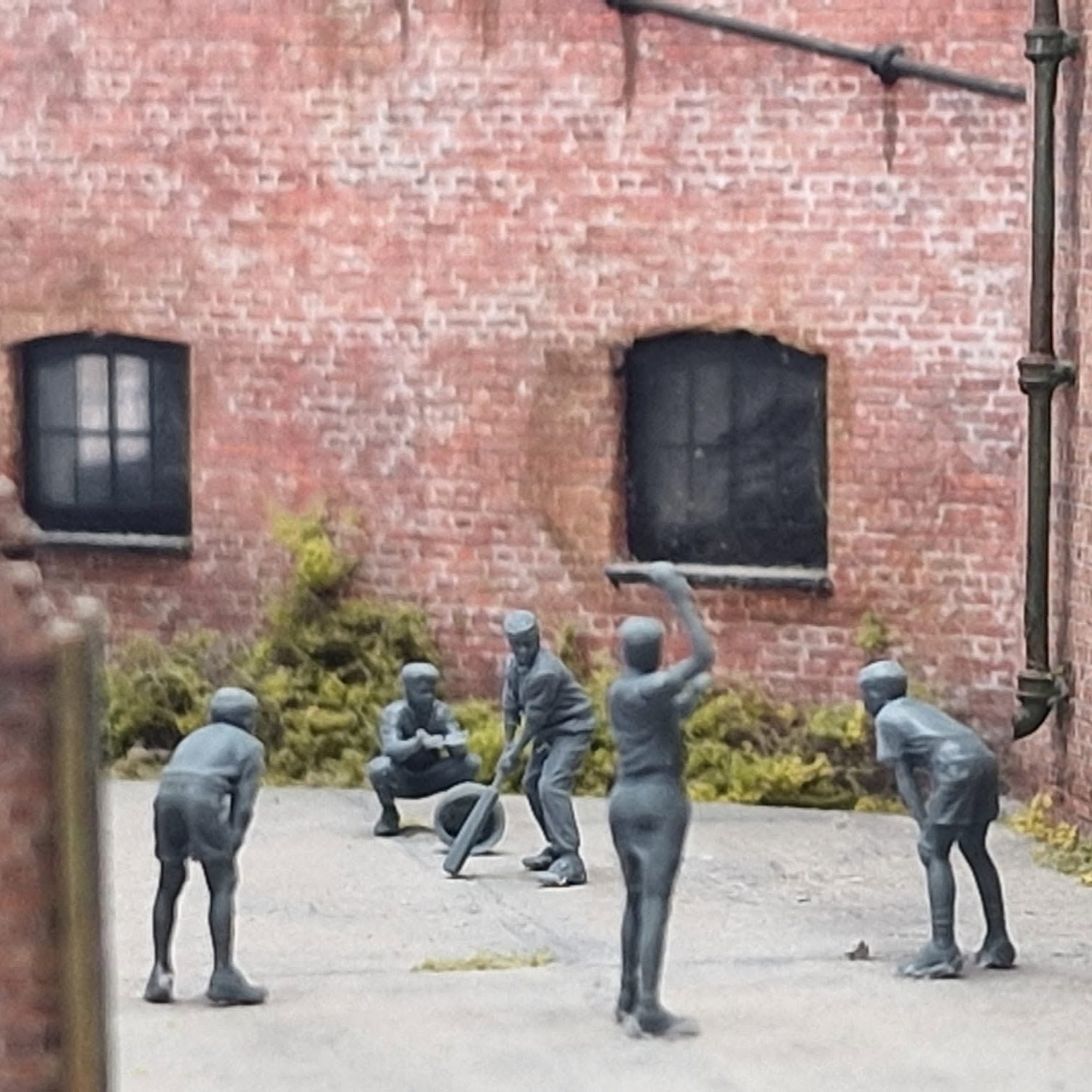
Children once spent far more time playing in streets, yards and other shared spaces, particularly where traffic was light. Informal games such as street cricket required little more than a bat, ball and improvised wicket, with walls, gates and kerbs becoming part of the playing area.


PROTEST and DISORDER
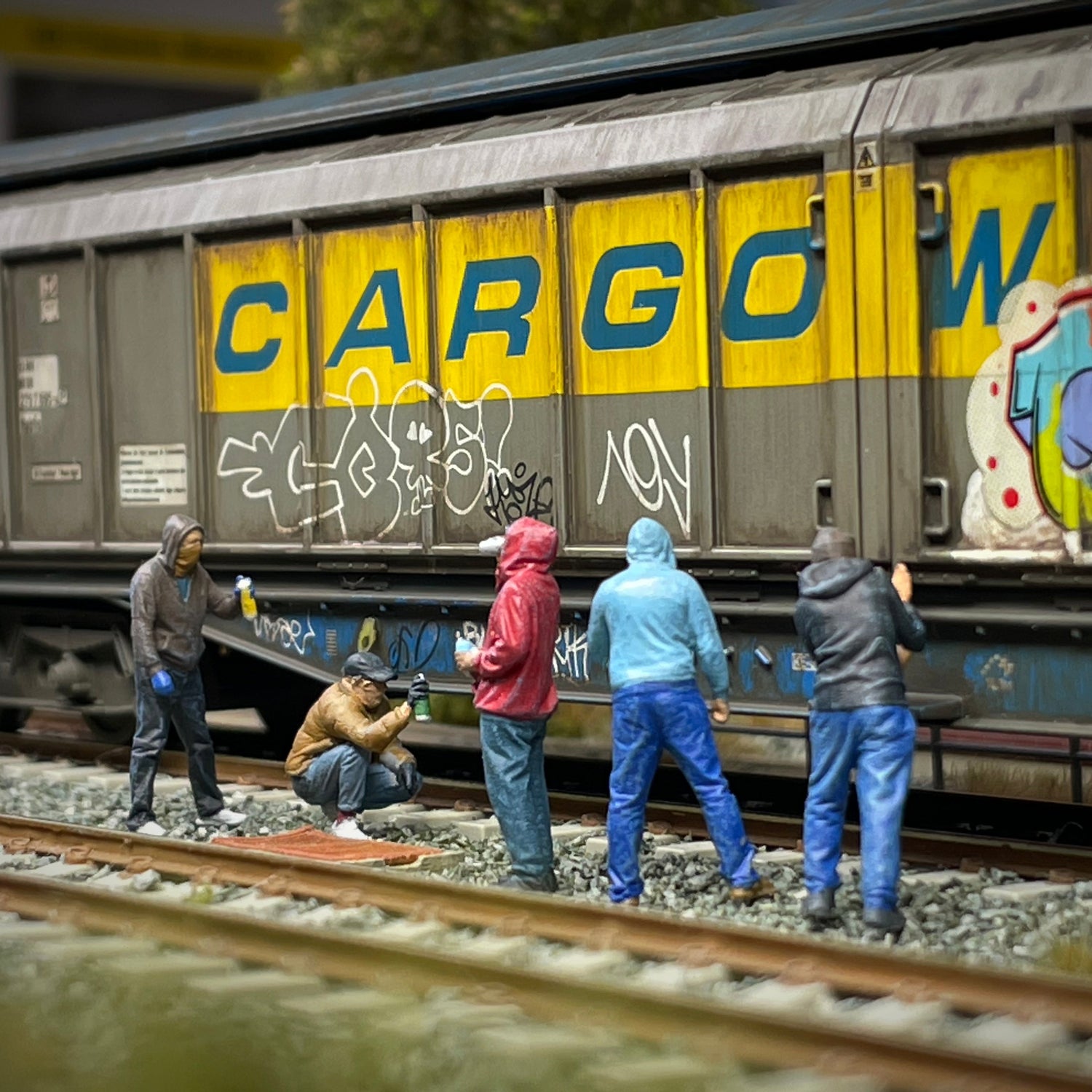
Not every street scene needs to depict orderly everyday life. Strikes, public demonstrations, vandalism and graffiti can reflect periods of political tension, industrial dispute or social change and can give a layout a more specific time and atmosphere.
Image courtesy of Cradley Bridge


SHOW US YOUR STREET SCENES
We’ve shown you our scenes, now it’s your turn!
Share your photos with us on social media using #Modelu for a chance to be featured in in our customer spotlight below.


